What’s really happening on one of Dallas’s most talked-about blocks — and what it says about where the city is going
If you’ve driven down Knox Street lately, you’ve probably noticed something is different. The scaffolding. The cranes. The storefronts that weren’t there six months ago. The energy that feels, somehow, elevated.
Knox Street has always been good. But what’s happening there right now isn’t just ‘good.’ It’s a genuine transformation — and understanding it tells you something important about where Dallas is headed, who’s arriving, and what they’re looking for when they get here.
What’s Actually Opening
The Corridor · Knox Street Dallas
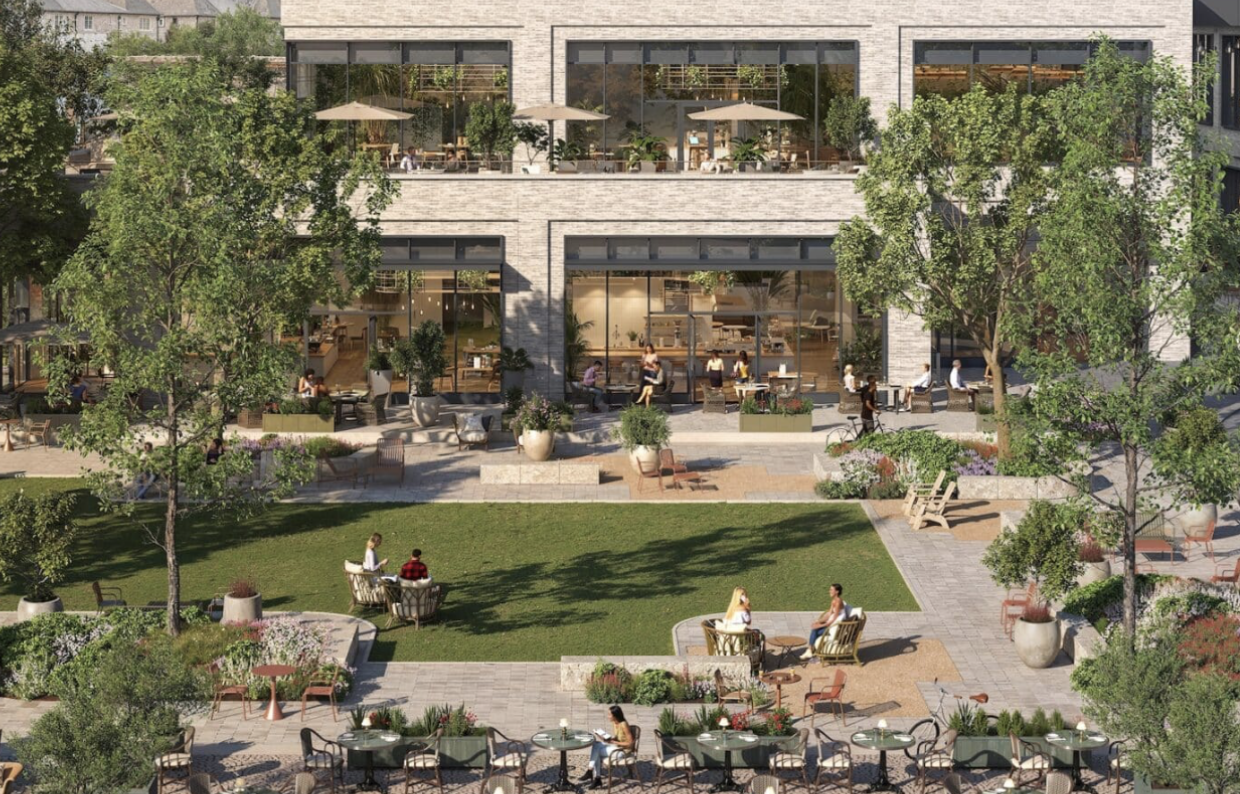
A million-square-foot mixed-use development anchored by The Knox Hotel — an Auberge Resorts Collection property — is weeks away from completion. And the brands that have signed on to be part of it are not an accident.
The former Pottery Barn space is being split into four storefronts: ME+EM, the British luxury label beloved by the Duchess of Cambridge set, opening its second Dallas location this fall. Addison Bay, the activewear brand with a cult following, choosing Knox for its first-ever Texas location in September. Hart Jewelry out of Charleston — first Texas store, mid-August. And a fourth tenant still to be announced.
Inside the hotel itself, Sant Ambroeus — the Milanese institution that has been feeding the Upper East Side, Aspen, and Palm Beach since 1936 — is making its Texas debut. If you’ve ever had a Shakerato at the Sant Ambroeus on Madison Avenue and thought ‘I wish Dallas had this,’ your wish is about to come true.
In December 2025, Knox Street announced DÔEN, STAUD, and TOTEME — three of the most-watched fashion brands in the country — would each be opening their first standalone Texas locations in the new development. TWP, the Dallas-born label, is getting its first permanent brick-and-mortar home here. Kith opened its first Texas store on Knox last year in the old Anthropologie space, with a Kith Treats ice cream bar inside. Jones Road Beauty — Bobbi Brown’s clean beauty line — opened its first Dallas store on Knox in 2025. And Roller Rabbit, which had been at Highland Park Village, moved to Knox Street in August 2025.
That list isn’t random. It’s a statement about who Knox Street thinks its customer is.
Why These Brands Are Paying What They’re Paying
The Why · Rents, Scarcity, the Katy Trail
Knox Street is expensive. Triple-digit rents per square foot for the best spaces — comparable to Melrose Avenue in LA, approaching Abbot Kinney. The brands arriving here aren’t coming because it’s affordable. They’re coming because Knox Street has less available retail space than almost any comparable corridor in the country, and because of what’s right next door.
The Katy Trail. In a city with no coastline, no river walk, no waterfront to speak of, the Katy Trail functions like waterfront property. Real estate analysts have literally described it that way. It connects neighborhoods, draws foot traffic, and creates the kind of organic daily energy that retailers need. Knox Street sits right at its edge.
One retail analyst described the ambition plainly: Knox-Henderson is being deliberately positioned as Dallas’s Melrose Avenue — the city’s first luxury retail street corridor with real national prestige outside of Highland Park Village. The development team behind the new Knox construction includes Highland Park Village Associates as a partner, which tells you exactly what they’re building toward.
Two Streets, Two Dallases
Old Dallas, New Dallas · A Cultural Shift
This is the part of the Knox Street story that I find most interesting — and the part that nobody quite says out loud.
Highland Park Village will always be Highland Park Village. There is nothing else like it in Dallas, and there never will be. It’s the original, the landmark, Rodeo Drive by another name. It’s old Dallas — generational Dallas — the families who have been here for decades, whose names are on buildings and hospital wings, who aren’t going anywhere and don’t need to.
Knox Street is becoming something genuinely different. It’s the neighborhood that Dallas’s newest arrivals are discovering first. The Goldman Sachs analyst who relocated from New York. The Samsung executive who flew in from New Jersey. The couple who came for a tech job and stayed for the life. They know Sant Ambroeus. They shop TOTEME and DÔEN. These are the brands they had around the corner before they moved here — and now those brands are following them.
It’s not competition between the two streets. It’s a second chapter. Highland Park Village holds the old roots. Knox Street is where the new ones are being planted. And the fact that Roller Rabbit — a brand that had happily lived at Highland Park Village for years — made its bet on Knox Street says something about where the energy is going.
Dallas in 2026 is a city with two luxury retail corridors, serving two distinct versions of itself. Both are thriving. Both are worth knowing about. The difference is in who walks through the door.
Who Buys a $4 Million Home Steps from Knox Street
The Residences · Knox Villas
If you want to understand where Knox Street is really headed, look at what’s being built one block away.
At 4423 Cole Avenue — just off Knox, behind private gates, steps from the Katy Trail — a gated enclave called Knox Villas is under construction. Twelve homes. Freestanding single-family ownership with no shared walls, roofs, or foundations. Pre-construction pricing starting in the mid-$4 millions. Half already reserved or under contract before a single wall was finished.
The construction detail here is worth pausing on, because it’s the kind of spec you typically find in a $7 million Preston Hollow estate — not in a lock-and-leave urban infill project.
Level 5 drywall on every wall and ceiling, which creates the kind of perfectly flat, gallery-quality surface that most builders don’t bother with because it’s expensive and unforgiving. Marble-clad fireplaces in the living room, the primary suite, and the covered outdoor terrace. Rift-cut white oak floors in two different patterns — running bond in some rooms, herringbone in others. Kitchens with Sub-Zero refrigeration, Wolf cooking, and Cove dishwashing set against marble countertops and backsplashes. Primary baths with cast-stone soaking tubs, limestone and marble flooring, and closets designed like furniture.
The engineering is just as considered: stabilized soils, structural piers designed for minimal vertical movement — a real concern in Dallas’s expansive clay soils — open-cell spray foam insulation, multi-zoned HVAC, natural gas throughout, and smart-home wiring built for whatever technology comes next. Private elevators with smooth traction technology. Two-car garages with EV charging.
Each home also has a private landscaped courtyard and a covered third-floor terrace with a built-in kitchen and fireplace — outdoor rooms designed for year-round use, not just the four months when Dallas weather cooperates.
So who buys this? The answer, based on how the listing agents describe their inquiries, is a very specific buyer: someone downsizing from a large Preston Hollow or Highland Park estate, who isn’t ready to give up the quality and privacy of a true custom home, but who is absolutely ready to give up the maintenance, the grounds, the twelve rooms they don’t use. They want the lock-and-leave ease of a high-rise condo without the compromises — no shared walls, a real garage, outdoor space that’s actually theirs.
And they want to be able to walk to Sant Ambroeus for lunch.
The architects are SHM Architects and Studio Thomas James — a collaboration worth noting. The listing agents are Cindi Caudle, Alli Caudle Bush, and Kyle Richards of Briggs Freeman Sotheby’s International Realty. This is not a listing I’m involved in — but it’s a development every serious buyer in the $4M+ North Dallas market should know about, because it represents something that genuinely hasn’t existed here before.
Knox Street as a Real Estate Signal
The Bigger Picture · What It Means
When brands like Sant Ambroeus, TOTEME, and Goldman Sachs choose the same half-mile radius, they’re not all making independent decisions. They’re reading the same data: where is the wealth concentrating, where is the foot traffic going, where are the people who will become their customers landing?
The answer, in 2026, is Knox Street and the Katy Trail corridor. And that signal matters to anyone who owns — or is thinking about buying — in the neighborhoods that feed into it. Oak Lawn. Turtle Creek. The townhomes along Cole and Armstrong. The new construction pushing up toward Knox from the south.
Real estate values follow energy. And right now, the energy in Dallas is on Knox Street.
The World Cup is in our backyard. Samsung just moved its U.S. headquarters to Plano. Goldman Sachs is building a campus a mile away. And Knox Villas is selling mid-$4 million homes off of architectural renderings before construction has finished.
I’ve been watching Dallas for a long time. This is not a moment I’d sit out.
https://knoxvillas.com/
Sources: Dallas Business Journal, PaperCity, CultureMap, Bisnow, Knox Street Dallas, CoStar, June–July 2026.