
Dallas is in the middle of something significant. Not a slow drift — a documented, accelerating shift in corporate investment, population, and momentum that is reshaping this corridor in real time. And simultaneously, the city is debating the fate of the building that was commissioned to tell the world what Dallas stands for.
Here’s the full picture — what’s arriving, what’s being debated, and what it all means for homeowners in North Dallas and Plano.
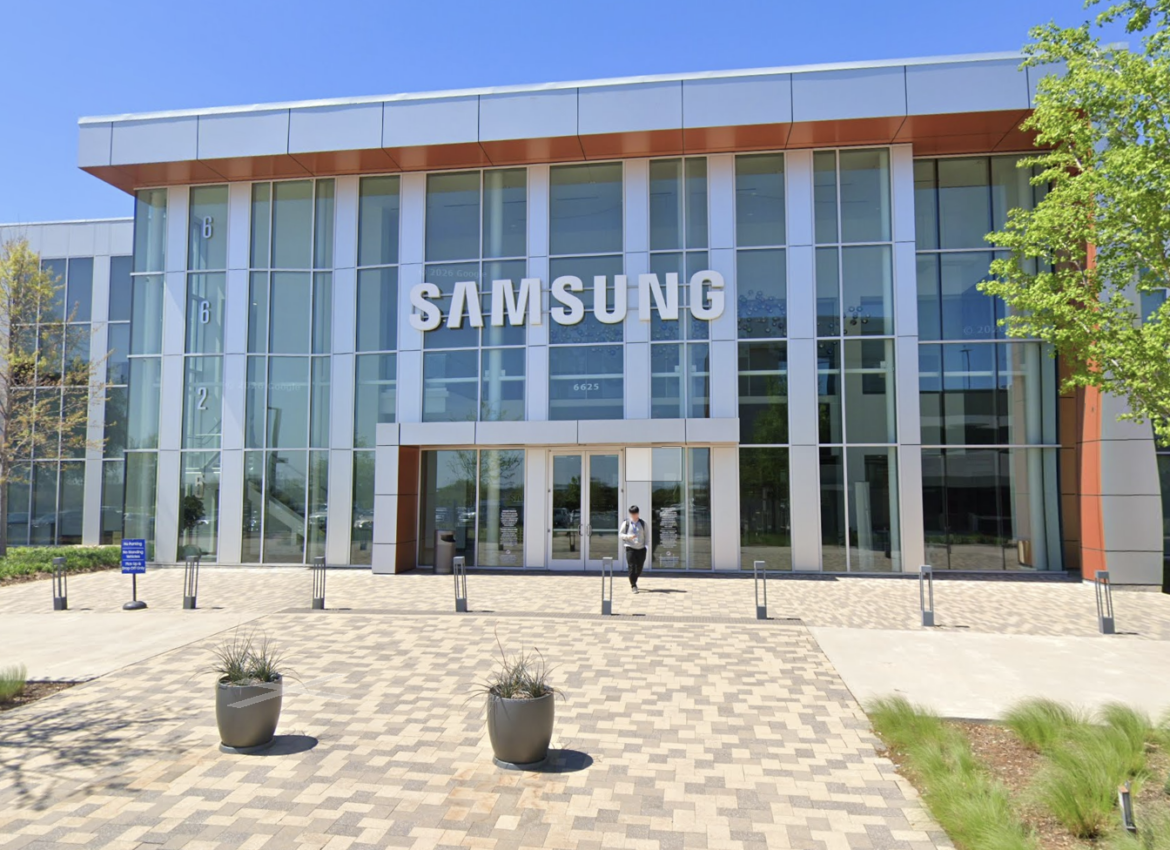
Samsung Moves Its U.S. Headquarters to Plano
On June 1, 2026, Samsung Electronics America confirmed it is relocating its U.S. headquarters from Englewood Cliffs, New Jersey to its existing campus at Legacy Central in Plano, Texas. Approximately 1,000 employees are faced with a decision to m make about relocating to Texas. The move is expected to be complete by end of 2026.
The campus at Legacy Central has been expanding for years. Samsung opened its first Plano facility in 2018. Subsequent expansions in 2020 and 2023 grew the footprint to more than 300,000 square feet. The Plano campus already housed Samsung’s US mobile and network business. Now it will house the company’s executive leadership as well.
The detail worth pausing on: Samsung hosted a grand opening at its brand-new Englewood Cliffs, New Jersey campus in September 2025. Eight months later, it announced it was leaving New Jersey entirely. That’s not a gradual drift. That’s a decision.
The strategic logic is clear. Samsung already has two major manufacturing investments in Texas — its semiconductor fab in Austin operating since 1996, and its advanced foundry in Taylor, Texas, expected to begin operations by end of 2026. Moving U.S. headquarters to Plano places executive leadership alongside the company’s two largest American investments.
Source: Dallas Business Journal / CultureMap Dallas, June 1, 2026
Samsung’s move is the latest in a pattern that has been building for years — Goldman Sachs, AT&T, Scotiabank, Nasdaq, NYSE. The economics are well documented. The culture shift is what’s harder to quantify: the executives arriving from New York, Los Angeles, and Toronto are not making a temporary decision. They’re buying homes, enrolling children in schools, and becoming part of communities. They are the next generation of North Dallas homeowners. Here’s what that means for the market.
What This Means for North Dallas and Plano Home Values – Corporate migration of this scale has consistent and documented effects on residential real estate markets. Here’s what the research shows and what I observe firsthand.
Sustained demand from a high-income buyer pool – The executives and senior professionals relocating for Goldman Sachs, Samsung, and AT&T are not entry-level buyers. They are looking for homes in the $800,000 to $3 million range in established neighborhoods with proven school districts. Preston Hollow, Prestonwood, Far North Dallas, and the Reservation are exactly what they’re looking for. This is not speculation — I see it at open houses every weekend.
Coastal equity coming into the market – A family selling a home in Westchester County, New York or the Bay Area of California is arriving in Dallas with significant equity. In a market that runs 50-60% lower in cost than where they’re coming from, that equity goes significantly further. They are not price-sensitive buyers in the way the local market traditionally defines that term.
Pressure on inventory in established neighborhoods – New construction can absorb some of this demand in Frisco, McKinney, and Celina. But buyers specifically seeking established neighborhoods — mature trees, larger lots, architectural character, walkable proximity to amenities — are competing for a finite supply of homes. That dynamic supports values in Preston Hollow, Prestonwood, and the surrounding corridors regardless of broader market conditions.
One honest note – Corporate campuses create demand for homes near those campuses. Goldman Sachs near Victory Park and AT&T/Samsung at Legacy Drive are different locations pulling in slightly different directions. The buyers arriving for Goldman Sachs are more likely to look in the Preston Hollow to Uptown corridor. The Samsung and AT&T arrivals are more likely to look in West Plano, Frisco, and the Legacy Drive corridor. Knowing which buyer pool applies to your specific home and neighborhood is exactly the kind of local knowledge that matters in a market like this.
Dallas City Hall — The Building, the Debate, and What Comes Next
While Dallas gains new arenas, a Samsung headquarters, and a Goldman Sachs campus, the city is simultaneously debating the fate of one of its most significant buildings — and the debate reveals something important about what kind of city Dallas wants to be.
The origin story.
When President John F. Kennedy was assassinated in Dallas on November 22, 1963, the city became known as “the city of hate.” Groups canceled conventions. Companies reconsidered relocating here. The economic fallout was real and immediate.
Mayor J. Erik Jonsson — who had been scheduled to introduce Kennedy at a luncheon at the Dallas Trade Mart that day — inherited a city that was, in his words, “drifting.” His response was to commission a new city hall that would tell the world what Dallas was and what it intended to become. He called on architect I.M. Pei.
“The people I met — rich and poor, powerful and not so powerful — were all very proud of their city. They felt that Dallas was the greatest city there was, and I could not disappoint them.” — I.M. Pei
What Pei designed is a 560-foot-long Brutalist structure of concrete and metal, with each floor widening by approximately 9 feet as you ascend — cantilevering outward to provide shade over the adjoining civic plaza. It was designed, in Pei’s firm’s own words, to “ambrace and welcome approaching pedestrians” while “accommodating diverse programmatic functions.” It opened in 1979. Henry Moore’s The Dallas Piece stands in the plaza in front of it.
What happened on June 10, 2026 – Dallas City Hall has been named one of Texas’ six Most Endangered Historic Places for 2026. Repair cost estimates range from $550 million to over $1 billion depending on scope, a consequence of decades of deferred city maintenance. Preservationists argue the building is structurally sound and that the city’s own neglect is being used to justify demolition.
On June 9, three Dallas City Council members — Adam Bazaldua, Paula Blackmon, and our own District 12 Councilwoman Cara Mendelsohn — filed a lawsuit alleging the city violated the Texas Open Meetings Act by rushing a special meeting on the building’s fate. A judge granted a temporary restraining order blocking the relocation vote.
On June 10, nearly 200 residents packed the council chambers to speak. The council voted to pause the $770 million repair strategy and asked City Manager Kim Tolbert to return in August with options for disposing of the 1500 Marilla Street site. Mayor Eric Johnson has stated publicly he supports moving City Hall and selling the land.
What Liane Pei said – Liane Pei, I.M. Pei’s daughter, spoke with D Magazine about her father’s legacy and the City Hall debate. She described how important the relationship between her father and Mayor Jonsson was to him — and what the building was meant to represent.
“Mayor Jonsson really wanted to make this statement that the city is a great city, and could be a greater city, and needed to have a monument to speak to its civic pride.” — Liane Pei
She raised a question worth considering: “What architect is going to want to ever build anything in a city that considers everything disposable after 25, 50 years?”
What comes next – The City Manager returns in August with options for the site. The lawsuit over Open Meetings Act violations is still active. The November council election will shape who is making these decisions going forward.
Whatever happens to Dallas City Hall will reshape the downtown core for a generation. With the Mavericks heading to North Dallas and the Stars to Plano, the question of what downtown Dallas becomes is genuinely open — and the answer will affect real estate values, investment decisions, and civic identity from Dallas Midtown all the way through the corridor.
Sources: D Magazine / KERA News / CBS Texas / Fox 4 Dallas, June 9–10, 2026
The Thanks-Giving Square story.
The same week Dallas City Hall’s fate was debated, a separate decision quietly emerged. After 53 years, the City of Dallas has cut all funding to the Thanks-Giving Foundation — the nonprofit responsible for the 3-acre sunken park designed by architect Philip Johnson, home to the bell tower adorned with the gold-leafed Circle of Thanks, the fountains, and the 90-foot Chapel of Thanksgiving with its spiral Glory Window. The Foundation was owed $500,000 due April 1 per their longstanding agreement. The city alerted them in November it wasn’t coming.
The decision was made without public discussion. City Manager Kim Tolbert was directed not to fund it during executive session. The City Council did not include it in the most recent budget. Tolbert cited “lack of public benefit” for the underground walkway. The city had attempted to freeze funding two years ago — this is the first complete cut in the organization’s 53-year history.
Thanks-Giving Square was dedicated in 1976 as one of the city’s three Bicentennial projects. Its original board of development included Lamar Hunt, Clint Murchison, Henry S. Miller, and Judge Sarah T. Hughes — names this city attached to streets and highways. President Gerald Ford called it “a major national shrine” in 1974. Architecture students still visit. On a recent Monday morning, seven of them were lying on their backs in the Chapel of Thanksgiving — sketching, photographing, staring up at the Glory Window.
Two civic institutions. Two architects. Both built to say something about who Dallas is. Both now uncertain.
Source: Robert Wilonsky, Dallas Daily News, June 2026 · thanksgiving.org
What I’m Watching — and What You Should Know
Goldman Sachs campus opening 2028 — the most significant near-term driver of demand in the Preston Hollow to Uptown corridor. Watch home values in that zone over the next 18 months.
Samsung and AT&T at Legacy — the most significant driver for West Plano, Legacy West, and the Tollway corridor. Buyers in that zone are already responding.
The August City Hall decision — if the 1500 Marilla Street site goes to private redevelopment, a mixed-use development adjacent to the Arts District and the Goldman Sachs campus could be transformational for downtown Dallas values.
The traffic question — three major development projects in the same North Dallas and Plano corridor. Mavericks at Preston and LBJ, Stars at Willow Bend, H-E-B at Hillcrest and LBJ. The infrastructure planning happening right now will determine whether these investments feel like opportunities or disruptions to the neighborhoods around them.