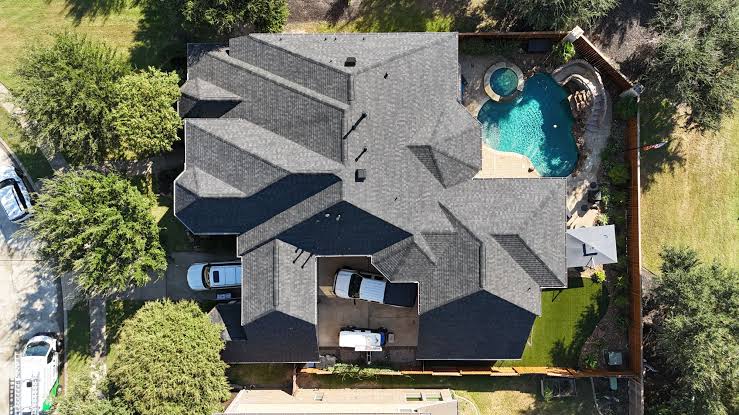
If your homeowners insurance renewal made you gasp this year, you’re not alone, and you’re not imagining it. Texas premiums rose 79 percent over six years, from under $2,000 a year in 2020 to more than $3,500 today. That’s the number that finally got the state’s attention. In August, the governor directed the Texas Department of Insurance to put consumers first on property insurance affordability. In September, the agency answered with the most aggressive consumer package I’ve seen in years.
So here’s your playbook: what happened, what the state just did, and exactly what to do about it before your next renewal.
The 79 percent problem
Two things did this. First, hail. More than 7.8 million Texas homes sit in moderate-or-greater hail risk zones, representing over $3 trillion in reconstruction value, and hail drove more than $3 billion in insured homeowner losses in 2025 alone, according to Cotality and TDI.
Second, the market hardened fast. TDI says average homeowners rates rose about 21 percent in 2023 and 19 percent in 2024. The pace cooled this year: Insurify’s September analysis has Texas premiums up 4.1 percent (about $180) in the first half of 2026, to an average of $4,560 a year. Better, but on top of those earlier spikes, the base is brutal. You’ll see different averages floating around because they measure different things. The state’s number reflects what Texans actually pay, while Insurify prices a standard policy for a homeowner with good credit and no claims, so it runs higher. At Insurify’s average, budget roughly $380 a month, and if you’re in a hail-prone corridor, plan for more.
What the state just did
On September 16, TDI announced a package of actions. Here’s what each piece means in plain English.
Price optimization: regulators say it was already illegal. Some insurers were using personal data unrelated to your actual risk, think shopping behavior and other proxies, to decide how much to charge you. Bulletin B-0007-26, issued September 2, says that practice already violates Texas law. If your rate ever felt arbitrary, this is the practice regulators are pointing at.
FORTIFIED roofs get formal recognition. Bulletin B-0008-26 directs insurers to reflect a home’s FORTIFIED roof status when they set rates. FORTIFIED is a specific designation from the Insurance Institute for Business & Home Safety: stronger fastening, a sealed roof deck, and, with the optional hail supplement, impact-rated shingles. If you have one, or a Class 4 impact-resistant roof, you may be entitled to a premium credit right now. Call your agent and ask. This isn’t a maybe. The bulletin is already out.
A fraud task force and a claims study. TDI is standing up an Insurance Fraud Task Force and ordered a study of inflated claims costs, due by the end of 2026. Inflated claims costs get baked into everyone’s rates, so if the study finds something real, it’ll show up in future rate filings.
A roof fortification program for 2027. Governor Abbott proposed a Texas Roof Fortification Program for the 2027 legislative session, which would help homeowners afford stronger roofs. Keep an eye on this one. Other states have had success with similar programs.
The roof-age rule: what it does and does not do
On September 29, TDI proposed an update to its declination rule to clarify that insurers may not decline to write or renew your residential property policy based on the age of your property or its components. Roof, wiring, heating, air conditioning, plumbing, and now siding too. TDI describes the update as a clarification of a rule that already bars age-based declinations.
The key carve-out: insurers can still decline based on physical condition. A 22-year-old roof in good shape can’t get you non-renewed on age alone. A roof that’s actually deteriorating still can. So keep your maintenance records and any inspection reports.
Public comment is open through November 9, with a public hearing on November 3. If a non-renewal letter ever cited your roof’s age as the reason, this rule is written for you.
The ZIP-code tool: use it before you shop
TDI launched a public page where you can enter your ZIP code and see exactly why home insurers have been declining, canceling or non-renewing policies in your area, plus counts of active policies, non-renewals, cancellations and declinations. You’ll see the reasons by ZIP code, not by individual company. More than 350,000 notices were uploaded through June, and the data updates at least quarterly.
The reasons you’ll see include claims history, location of the risk, wind, hail and hurricane exposure, and an insurer’s concentration of risk in an area. The tool came out of a 2025 law, HB 2067, which requires insurers to report this data and give you specific written reasons when they drop you.
Before your next renewal or a new purchase, punch in your ZIP. It tells you what you’re walking into, and it gives you something concrete to talk through with your agent.
Your appraisal right: the dispute lever you already have
You also have a dispute option most homeowners never hear about. A 2025 law, SB 458, created a mandatory right to appraisal for residential property and personal auto policies issued or renewed on or after January 1, 2026. If you and your insurer disagree about the amount of a covered loss, say hail damage to your roof, either side can demand an independent appraisal instead of heading to court. The award is binding except in cases of fraud, mistake or lack of authority.
The detailed implementing rules are still being finalized, but the right itself is live on 2026 policies. Separately, TDI adopted an updated Consumer Bill of Rights that spells out your appraisal right, and insurers have to start providing it on January 1, 2027. So if your claim payout feels low, you now have a formal path: invoke appraisal. Ask your agent how your carrier handles the demand.
New options, credits, and 2025 laws that work in your favor
A new admitted option. Bamboo Insurance, a managing general agent, launched a “Texas Essential” homeowners product in September. It’s an admitted product with flexible roof coverage, water coverage and loss-settlement options you can tailor to your home’s age and condition, plus credits for qualifying improvements and discounts for claim-free and recent-buyer homeowners. Get a quote, especially if you want flexible roof coverage on an older-but-sound roof.
2025-session laws now in effect. Insurers must give you specific written reasons when declining, canceling or non-renewing (HB 2067, the basis of the ZIP tool above). They can’t force you to bundle home and auto (SB 213). And if an insurer uses credit in pricing, it has to refresh your credit information at least every three years, and you can ask for a re-rate using your current credit once a year (SB 1644). If you get a non-renewal notice now, the insurer has to tell you why in writing, and you can unbundle without penalty if bundling isn’t saving you money.
What This Means If You’re Buying, Selling, or Investing
Buying: Get an insurance quote during your option period, not after. On an older home with an aging roof, the roof-age rule protects you from age-based declinations, but condition still counts, so make the roof inspection real, not a formality. Ask the seller for the roof’s age, documentation, and any FORTIFIED or Class 4 certification. Insurance cost belongs in your monthly-payment math from day one.
Selling: If your roof is older but in good shape, say so up front, with documentation. Buyers are anxious about insurance right now, and a clean inspection report plus maintenance records neutralize the objection before it forms. If you have a FORTIFIED or Class 4 roof, put it in the listing. It’s a real selling feature in this market.
Investing: Underwrite insurance as a real line item, not an afterthought. In DFW, hail exposure makes premiums one of your biggest variable costs, and the spread between a well-maintained, impact-resistant roof and an aging one shows up directly in your cash flow. New credits and the fortification program on the horizon favor investors who buy right and roof right.
What it all adds up to
For years, Texas homeowners had almost no leverage on insurance. Rates climbed, carriers non-renewed, and the explanation was a shrug. This package doesn’t fix everything overnight, but it shows the state finally stepping in: price optimization called out, roof status credited, age-based declinations challenged, and your ZIP code’s data made public. The homeowners who benefit most will be the ones who act on it: call your agent about credits, check your ZIP before renewal, document your roof, and know your appraisal right before you need it.