
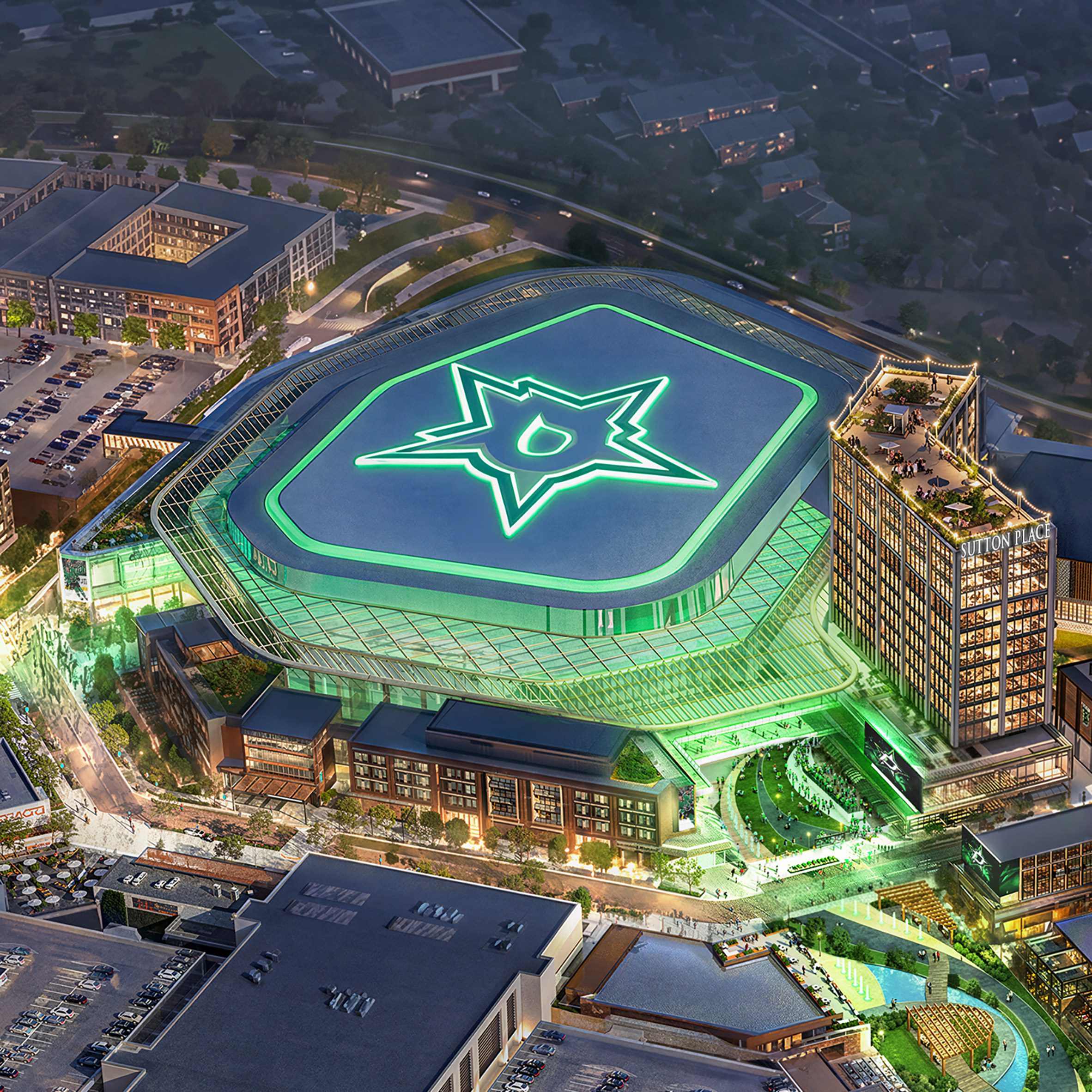
If you live anywhere near Plano, you’re going to see Proposition A on your ballot this November, and I think a lot of people assume it’s a yes-or-no vote on whether the Dallas Stars arena gets built at all.
It isn’t. Here’s what it actually is.
What the City Already Did, Back in June
On June 8, Plano City Council took four separate votes, all unanimous, all part of the same larger decision about whether to bring the Stars to Willow Bend:
A non-binding letter of intent to pursue roughly a $1 billion arena, anchoring a $3 billion entertainment district on about 90 acres at Park Boulevard and the Dallas North Tollway.
A $15 million incentive agreement with the mall’s ownership, tied to demolition, site prep, and a new visitor center for the district.
The creation of a Tax Increment Reinvestment Zone, or TIRZ, covering almost 900 acres along the tollway. This is where the $700 million figure you’ve probably heard comes from.
A Venue Project Resolution sent to the State Comptroller — a required step before the city could even ask voters to approve any venue taxes.
None of that required a public vote. It’s already happened.
So What Is Proposition A, Then?
Prop A asks Plano voters to authorize five specific taxes, all tied to people actually using the venue, not to your property tax bill:
- A short-term motor vehicle rental tax, up to 5%.
- A hotel occupancy tax increase, up to 2%, bringing the combined hotel tax rate to a maximum of 15%.
- An event parking tax, up to $3 per car.
- An admissions tax, up to 10% of the ticket price.
- A venue facility use tax, up to $5,000 per game, charged to visiting major league teams.
If Prop A passes, none of these taxes go into effect automatically — it just gives City Council the authority to decide which ones to actually use, and at what rate.
Here’s the Part That Surprises People Most: A “No” Vote on Prop A Does Not Stop the Arena.
The city has said this directly. The TIRZ is already established and doesn’t require voter approval at all. If Prop A fails, Plano can still move forward with the development — it would just lose access to this one additional financing tool.
How the TIRZ Actually Works
A TIRZ takes a snapshot of what an area’s property and sales tax revenue is worth today, then lets any tax growth above that baseline, as the area gets redeveloped and becomes more valuable, get set aside into its own fund instead of the city’s general budget. That set-aside money is what pays for the public side of a project like this.
In this case, the city is projecting that growth, called the increment, to be worth up to $1.63 billion over 41 years. The plan is for that increment to go toward the arena’s public improvements until it reaches $700 million, or until 41 years pass, whichever comes first.
One detail worth understanding clearly: if 41 years pass and the increment hasn’t generated the full $700 million, the city, meaning taxpayers, would be responsible for covering the shortfall.
That’s a real financial mechanic built into the structure, not a hypothetical, and it’s worth knowing regardless of how you feel about the project itself.
The School District Is Involved Too, Just Differently
Plano ISD’s Board of Trustees separately approved participating in the same TIRZ, contributing 50% of the increment generated inside the zone, capped at $250 million or 25 years, whichever comes first. That’s a smaller commitment than the city’s, both in dollar cap and in timeline.
Here’s the context that matters: Plano ISD is what’s called a property-wealthy district under Texas school finance law, meaning it collects more in local property tax than the state formula allows it to keep. The extra gets sent to Austin and redistributed to other districts around the state. Texas law includes a specific provision allowing districts to get made whole by the state for money they contribute to a TIRZ instead of sending it through that redistribution process. So the actual choice in front of the school board wasn’t arena money versus classroom money — it was whether that specific slice of revenue stayed local or went to Austin.
Who Owns the Building
Under the current plan, Plano would own the arena and the land underneath it, and lease it to the Stars for an initial 30-year term. The team would be responsible for operating and maintaining it. City ownership is actually what unlocks this entire financing structure under Texas law — the venue tax options only apply to publicly owned facilities. It also means the cost of running the building falls on the team, not on the city budget.
The building wouldn’t be limited to hockey, either — expect concerts and other large public and school events to use the space too.
What People Are Actually Concerned About
The city received more than 2,400 written public comments during its input process. In a separate survey of 861 people who attended the city’s July open houses, 84% identified traffic as a concern. Parking, quality of life, noise and neighborhood access also came up repeatedly.
The city is now moving into the next phase of studying those concerns. A citizen advisory committee representing neighborhoods around Willow Bend is being developed to give nearby residents a more formal role in the process, while the city works through traffic, parking, transit and market-impact questions surrounding the proposed district.
For homeowners, the traffic piece is probably the one to watch most closely. The city is studying how an arena would affect not just the immediate site, but the surrounding road network and neighborhood access.
What Happens Next
Early voting starts October 19, and Election Day is November 3. In the meantime, the city and the Stars are continuing to work through the details of the project, including traffic, market and community-impact questions. The city has said additional information from those studies will help shape the next phase of the process.
For anyone who lives near Willow Bend, those details may ultimately be more meaningful than the arena itself — particularly when it comes to traffic, parking and how the surrounding area develops.